The Cloud: What It Actually Is - and How to Stop Being Intimidated by It
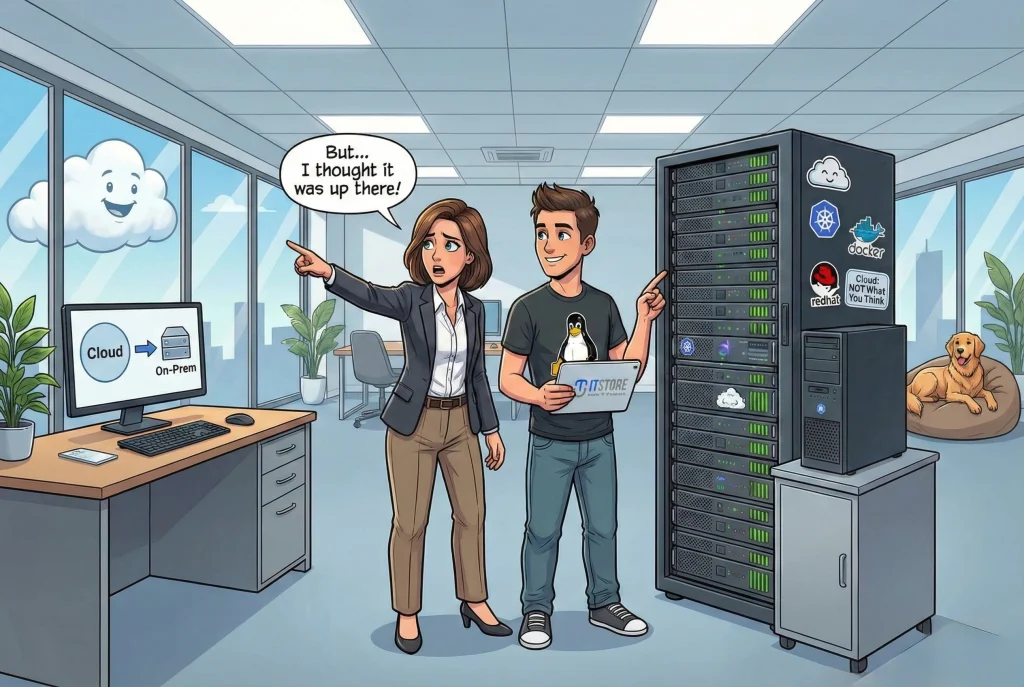
The word "cloud" makes it sound like something floating, mystical - possibly damp. But in reality? It's simply someone else's computer, somewhere else, connected to you over the internet. Cloud = a large, professional machine that runs software for you, stores your files, and handles heavy workloads without requiring a server room, industrial fans, or anyone promising "we'll deal with it tomorrow."
Why Do We Even Need It?
Because once upon a time, every organization ran its own servers. It looked something like this:
- Unbearable heat in the server room
- A noise level suggesting a plane was taking off nearby
- If any component failed - absolutely everyone heard about it
The cloud solved all of that. The people managing these servers are now tech giants with the resources, expertise, and more air conditioning units than should legally be allowed.
The Three Types of Cloud
- Public Cloud - AWS, Google Cloud, Azure. Massive computers owned by huge companies, shared by many users who never see each other. Think of it like a gym: everyone uses the equipment, but everyone does their own thing.
- Private Cloud - Servers managed exclusively for you. Like a private gym, more expensive, but everything is yours alone.
- Hybrid Cloud - A bit of both: some resources on your side, some elsewhere. Like a gym membership combined with a personal trainer at home.
What Does the Average Employee Need to Know?
For most users, the cloud simply means their files and applications work from anywhere - the office, home, a coffee shop, or even an airport lounge while waiting for a flight to Abu Dhabi.
And What Does DevOps Want You to Understand?
That the cloud enables:
- Automatic backups
- High availability and resilience
- Stronger security
- Rapid scaling - "more power" without buying new hardware
- Far less time managing servers that heat the office like a sauna
So Why Does Everyone Get Confused?
Because it's called a "cloud," and that sounds about a thousand times more dramatic than it actually is. But let's cut to it: Cloud = someone else's computers, expertly managed and working for you.
The Bottom Line
It's not magic, and it's not up in the sky. It's simply a modern, intelligent, and quietly effective solution. Once you understand that, every workplace conversation becomes much easier:
"Why do we need the cloud?" "So we don't have to buy large hard drives for every computer, for starters." "Why is that stored in the cloud?" "Because we don't need to hold everything on-site - it's a more secure and straightforward way to keep our data." "Ah. That makes sense."
And that's it. No drama, no monstrous jargon, and absolutely no need to call it an "atmospheric technological continuum."