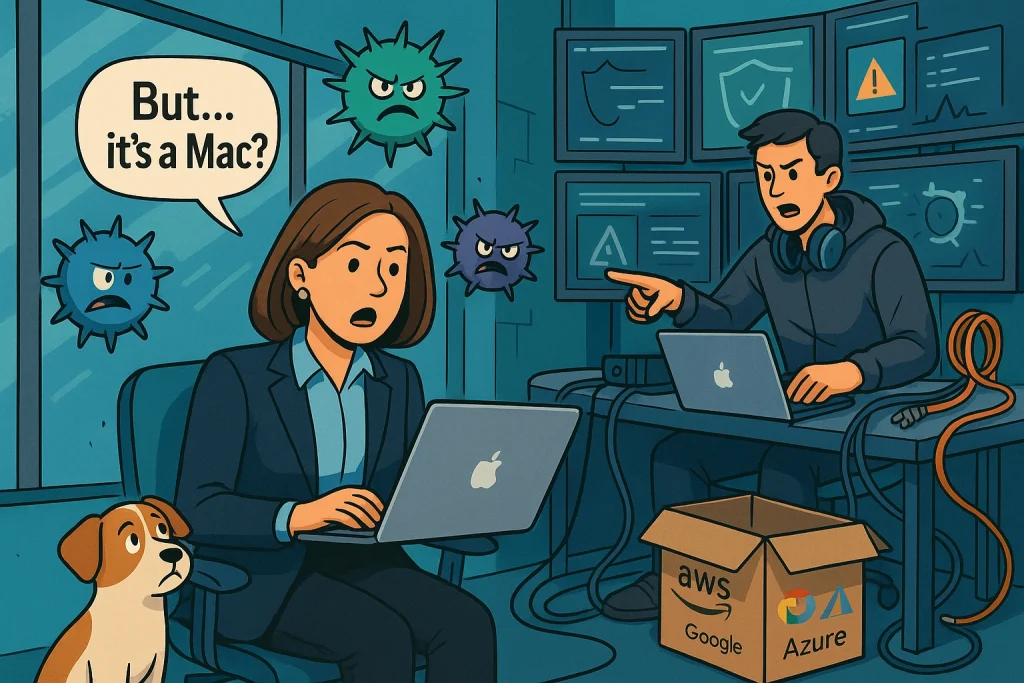
Antivirus: What It Actually Is - and Why Working on a Mac Doesn't Make You Invincible
There are a few lines that come up in every organization, without fail:
- "I'm on a Mac, I'm protected."
- "I opened a file someone sent me - what's the worst that could happen?"
- "I have antivirus… I think… I installed something once."
And that's precisely the moment someone in IT feels a quiet chill run down their spine. So let's clear things up - what antivirus actually is, why everyone needs it, and what the real threats look like in 2026.
What Is Antivirus, Really?
The word "antivirus" is a bit of a misnomer at this point. It hasn't been just about viruses for a long time. Modern antivirus solutions are built to handle: malware, ransomware, spyware, phishing, browser hijacking attempts, files that look harmless but contain malicious commands, zero-day attacks - and everything else that keeps IT teams running on black coffee stronger than the servers themselves.
Antivirus is, in essence, an intelligent protection system that detects suspicious behavior, stops it in its tracks, and alerts you before anyone gets the chance to say "why is my computer making strange noises?"
"But I'm on a Mac - so I'm immune, right?"
No. Nice try, though 😜
macOS is indeed considered a more secure operating system - but not an invincible one. Here's why:
- Macs used to be "less interesting" to attackers. Today? A huge number of organizations have moved to Mac, and hackers simply follow the most widely used platforms. It's not personal. It's math.
- Some attacks don't care about your operating system - phishing, browser-based malware, malicious Office files, or connecting to an unsecured public Wi-Fi network. An attacker doesn't need to break through your OS to cause serious damage.
- Employees are the vulnerability, not the computer. Your computer won't click on a file named Invoice_FINAL_REAL_REAL_v3.pdf.zip. Your employee might.
- Macs still need security updates - and anyone who isn't applying them has a problem entirely of their own making.
The Right Approach to Security in 2026
- Advanced, up-to-date antivirus - not something someone installed in 2019 and forgot about.
- A clear organizational security policy - file access, downloads, permissions, all of it needs to be properly defined.
- Employee training - even a short session works. Ten minutes showing staff what a real phishing attempt looks like can make a significant difference.
- Centralized monitoring by a professional - because if an employee receives a security alert, there's no guarantee they'll know what to do with it.
In Summary
Today's threats don't hide under the keyboard. They arrive via email, downloads, links, USB drives, and even a careless screen share.
Good antivirus isn't about "keeping IT happy." It's the office's seatbelt.
And most importantly? It works 24/7, never asks for a coffee break, and doesn't need time off.
(Unlike some members of the team…)